


Guanosine 5′-triphosphate (GTP)
Triphosphate for RNA synthesis and transcription
| Size | Catalog No. | Price |
|---|---|---|
| 1 ml | BCT-44-S | € 60,00 |
| 10 ml | BCT-44-L | € 360,00 |
Chemical Properties
-
Molecular Formula
C10H16N5O14P3
-
Shelf Life
12 months unopened after receipt
-
Storage Conditions
-20 °C, RNase free
-
Molecular Weight
523.18 g/mol
-
Purity
≥ 98.5% (HPLC)
-
Physical State
100 mM solution in water (pH 8.3 ± 0.2)
-
CAS Number
86-01-1 (free acid)
36051-31-7 (sodium salt) -
Absorption (max)
λmax = 260 nm
-
Ɛ (max)
15,000 cm-1M-1 (pH 7.0)
Product Information
Essential Nucleotide for RNA Synthesis and Cellular Metabolism
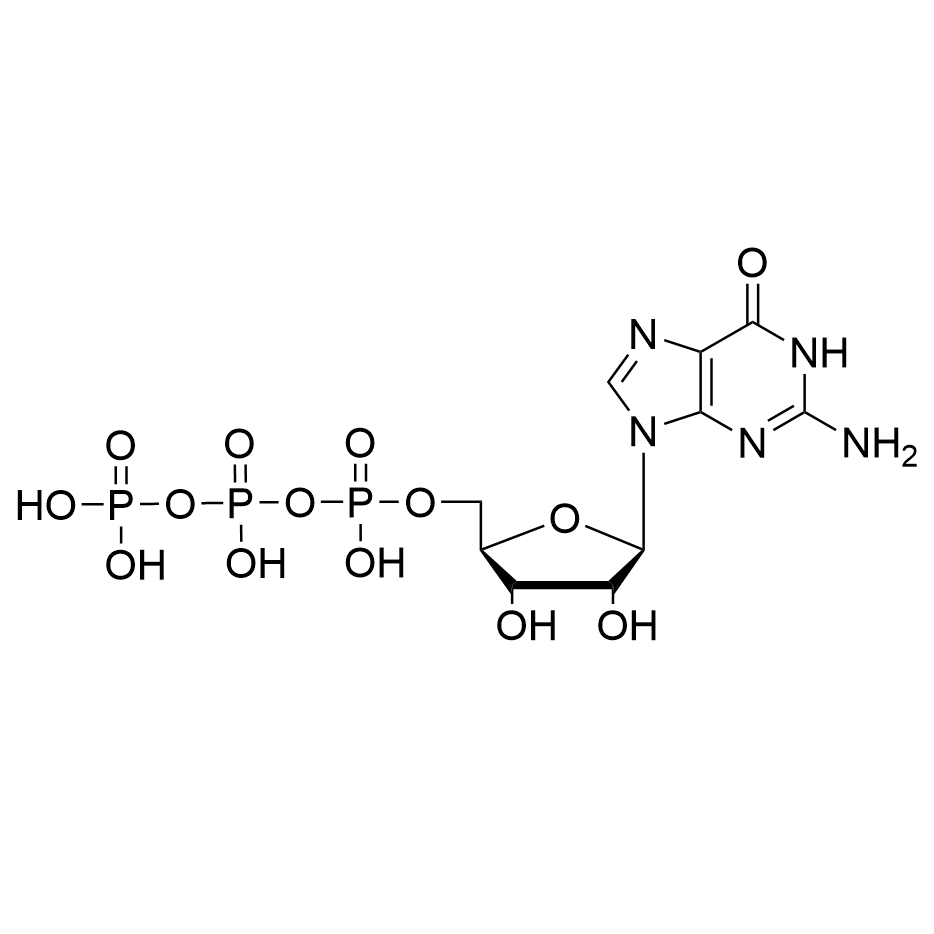
Guanosine 5′-triphosphate (GTP) is an essential ribonucleoside triphosphate composed of the purine base guanine, the sugar ribose and three phosphate groups. As one of the four canonical building blocks of RNA (alongside ATP, CTP, and UTP), GTP plays a central role in RNA transcription, energy transfer, and cell signaling.
Key Functions & Applications
- RNA Synthesis: GTP provides guanosine monophosphate (GMP) units during transcription, enabling both natural and synthetic RNA production.
- Energy Transfer: In several metabolic processes the universal energy provider ATP is substituted with GTP. This is particularly used if the process should not be influenced by general ATP bulk levels to enable tight regulation. Known examples are microtubule dynamics or G-protein based processes. Additionally, the ribosomal processes of protein synthesis are driven by GTP.
- Signal Transduction: GTP is used as a molecular switch to control many signal transduction pathways. Most commonly this is performed in combination to G-proteins, which are active if bond to GTP, but turn inactive if GTP is hydrolyzed to GDP.
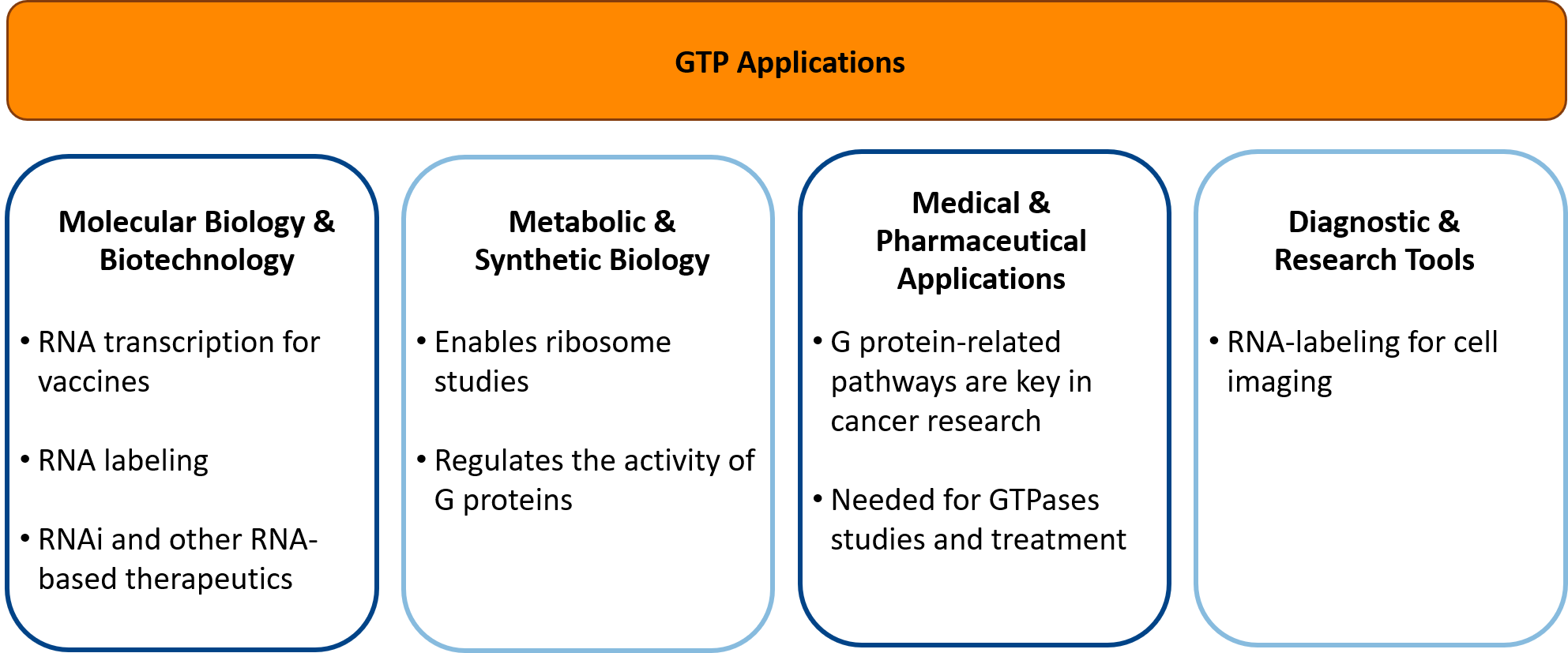
GTP now plays a pivotal role across several research and clinical domains:
Molecular Biology & Biotechnology
- Substrate for IVT (T7/SP6) to generate mRNA, gRNAs, and other functional RNAs.
- Powers cell free transcription/translation and ribozyme studies.
Biomedical Research
- Central to studies of ribosomal work
- Used in metabolomics and nucleotide pool profiling (e.g., LC–MS, enzyme activity assays).
- GTP is necessary for microtubule growth and therefore for cell structure analysis.
Diagnostics & Biosensing
- Component of NTP mixes for IVT based assays, CRISPR gRNA production, and RNA standards.
- Essential for research for G-protein-coupled receptors (GPCRs).
Therapeutics & Cell Therapy
- Core reagent for research grade mRNA manufacturing and RNA therapeutic prototyping.
- GTP is a key player for protein synthesis and therefore for targeting translation defects
Scientific Impact
The discovery and characterization of GTP revolutionized molecular biology by:
- Clarifying the role of guanosine in RNA synthesis
- Enabling controlled RNA production in laboratory settings
- Expanding understanding of nucleotide-based signaling pathways
- Supporting innovations in diagnostics, therapeutics, and synthetic biology
Modified unhydrolyzable variants of GTP enable freezing of the ribosome in certain positions.
FAQ
-
What is GTP used for in molecular biology?
GTP is used as a substrate for RNA polymerases during RNA synthesis and as universal energy source for the ribosome.
-
How does GTP contribute to energy metabolism?
GTP can act as an alternative energy donor to ATP in certain reactions, such as signaling pathways or for ribosome activity.
-
Can GTP be used in RNA synthesis in vitro?
Absolutely. GTP is a standard reagent in in vitro transcription kits and RNA synthesis protocols.
-
Is GTP stable under standard lab conditions?
Yes. GTP is typically supplied as a sodium salt and remains stable under neutral pH and cold storage conditions. Remove repeated freeze-thaw cycle, make aliquots if smaller amounts are needed repeatedly.
-
How is GTP stored and handled in the lab?
GTP should be stored at –20°C, protected from moisture and repeated freeze-thaw cycles to maintain stability.
-
Where can I purchase GTP for research use?
GTP is available through baseclick’s webshop and authorized distributors. Contact baseclick for bulk quantities or technical support.